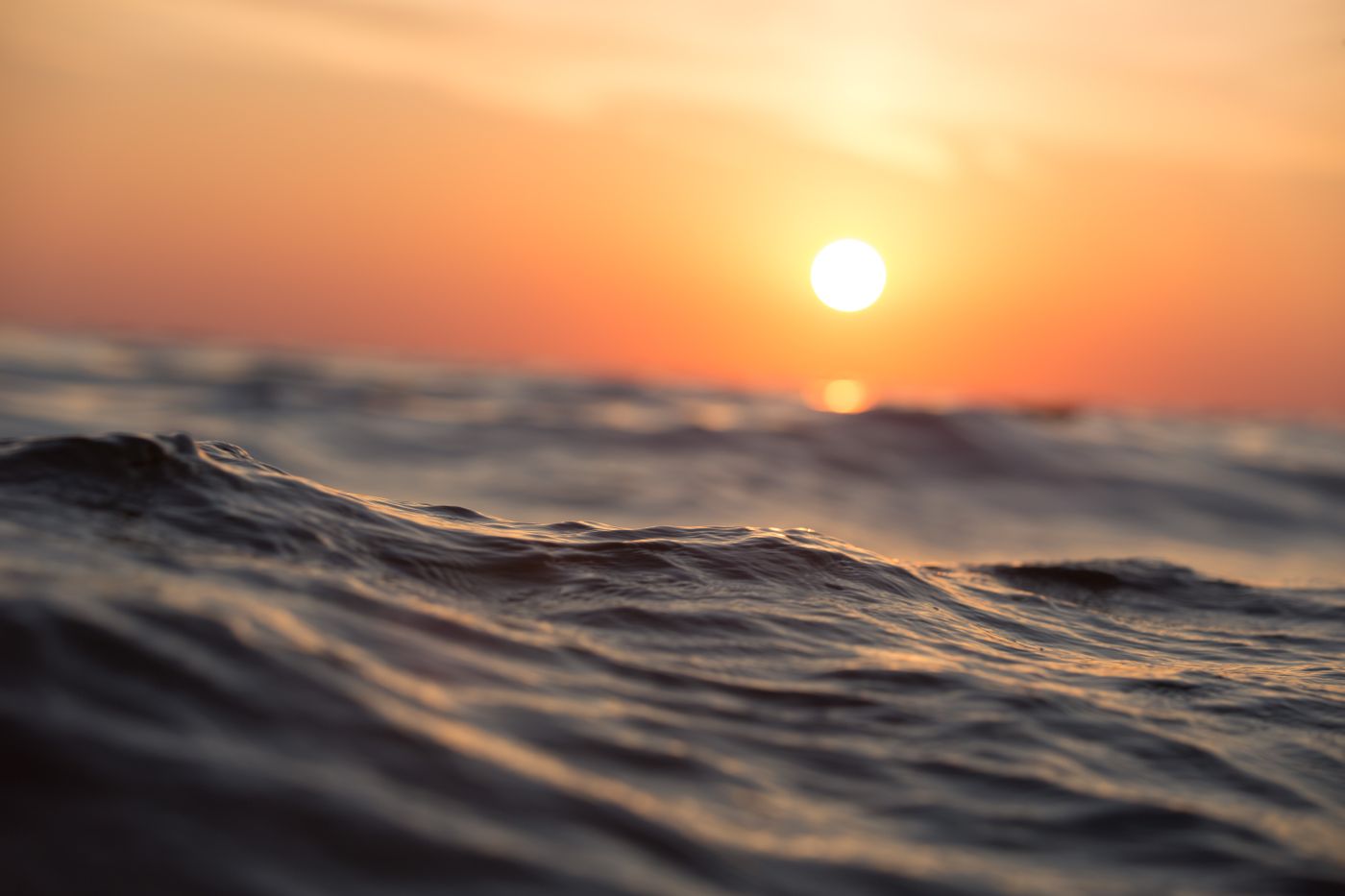
I went to the beach after work because my flat felt too still and the television was offering nothing I wanted to hear. The bus ride from Bedok took twenty minutes with traffic. I got off near the park entrance and walked the path I know by sound — bicycle bells, distant barbecue smoke, the perpetual hush of tyres on the park connector — until the path gave way to sand and the sand gave way to the strip where the tide had last reached.
The shore was not empty but it was spread thin. A man cast a line into the water with the unhurried arm of someone who has already accepted that the fish may not come. Two children dug a hole that collapsed twice and they dug it again without complaint. Further down, a cleaner in an orange vest moved along the high-tide line, picking up what the day had left behind — bottles, wrappers, a flip-flop sole without its partner.
I walked without destination, which is the only way I walk on a beach. My shoes were in my bag. The sand was cool under my feet where the shade from the casuarinas reached, and warm where it did not. Shells scattered under my toes — small ones, mostly broken, the kind that crunch rather than gleam.
Then I saw the driftwood. It lay half-buried at an angle, pale grey-brown, about the length of my forearm, thicker at one end and tapered at the other. The tide had worked it smooth in places — a satin finish along the grain — and left it rough in others, splintered where something had snapped it from a larger piece. Waterline marks circled it in faint rings, each ring a record of a height the sea had once held.
It had no label, no name, no one standing nearby to say it was theirs. It was simply there, between one tide and the next.
I crouched and picked it up. It was lighter than it looked — dried out, hollow in places where rot had begun and stopped. A small shell was lodged in a crevice near the thick end, wedged so firmly I thought at first it had grown there. I tried to loosen it with a fingernail and it did not move. The shell was spiral, no bigger than my thumb, bleached to a colour close to bone.
I turned the wood over in my hands. The smooth side had the feel of something handled many times — not by a person, but by water, by sand, by the repeated grinding of arrival and retreat. I thought about how far it might have travelled and realised I had no basis for guessing. Could have come from a tree five kilometres inland, carried by a river. Could have fallen from a bumboat. Could have been here for months, buried and uncovered with each shift of the shore.
Objects on a beach exist in a temporary democracy. They belong to whoever picks them up and to no one at all. I looked around to see if someone was searching for this piece — a child missing a treasure, an artist who had dropped raw material — but no one was looking. The man with the fishing line had not turned. The cleaner was further down, his orange vest a bright stitch in the distance.
I held the driftwood a while longer, feeling its weight shift as I changed grip. The shell pressed against my palm. Salt had crusted in the crevice around it, fine and white as frost. The wood smelled of nothing much — sun, old water, the faintest trace of something organic fading out. I put it back where I found it, half-buried again at the same angle, the shell facing up.
Someone else might pick it up tomorrow. Or the tide might take it back tonight and deposit it somewhere I would not recognise. Or it might stay exactly where I left it, sinking gradually into the sand over weeks until only a suggestion of pale wood remained visible, like a bone coming up through skin.
I walked back toward the bus stop with sand on my heels and the image of the driftwood fixed in my mind more clearly than most things I had seen that week. Not because it was beautiful — it was not, particularly — but because it had no owner and no obligation to mean anything, and I had looked at it anyway, and put it down, and walked away.
On the bus home I wiped my feet on the mat and watched the streetlights slide past the window. My hands still held the ghost of the wood’s smooth grain, and the shell’s hard edge against my palm, and the cool sand I had walked through to reach it — sensations without a name, fading by the time I reached Bedok, but present long enough to write down.